Beyond the Caffeine Crash: How Nootropic 'Brainergy' Shots Are Replacing Your Afternoon Coffee
Your 3 PM slump is not a caffeine deficiency. It's a nutrient deficiency. Here's the science that's changing how high performers fuel their brains — without the crash, the jitters, or the ruined sleep.
What is a Nootropic Brainergy Shot?
A nootropic Brainergy shot is a concentrated liquid supplement formulated with cognitive-enhancing compounds — including methylated B vitamins, adaptogens, amino acids, and natural plant extracts — designed to deliver sustained mental energy, focus, and clarity without the blood sugar spike and crash caused by caffeine. Unlike coffee, which works by blocking one tiredness signal in the brain, nootropic shots activate multiple neurotransmitter and metabolic pathways simultaneously, providing 4–6 hours of clean, crash-free brain energy. In 2026, they are one of the fastest-growing segments in the global cognitive health supplement market — now valued at over $6.2 billion.
- Coffee creates energy by blocking tiredness signals — it does not actually produce energy. When caffeine wears off, accumulated tiredness floods back, causing the afternoon crash that costs you hours of productivity.
- Nootropic Brainergy shots activate the brain's actual energy production pathways — delivering B vitamins for ATP synthesis, adaptogens for stress resilience, and amino acids for neurotransmitter production — for 4–6 hours of sustained focus with no crash.
- The Vitamin Shots liquid formula delivers these cognitive nutrients at up to 98% bioavailability vs. 10–20% for standard capsules — meaning faster onset, greater effect, and real results your brain can feel.
The Truth About the 3 PM Crash
It happens to almost everyone. You make it through the morning in reasonable shape — maybe with the help of a cup or two of coffee. Then lunch hits. And somewhere between 2 and 4 PM, your brain just... stops. Words blur on the screen. Decision-making feels impossible. Your eyes get heavy. You consider another coffee but know it'll destroy your sleep. So you power through, half-present, half-somewhere-else, until 5 PM rescues you.
Here is the critical insight almost nobody teaches: the 3 PM crash is not primarily a sleep problem. It is a nutrition and neurochemistry problem. Your brain is a metabolically voracious organ — it consumes approximately 20% of your body's total caloric energy despite being just 2% of your body weight.[1] When the nutrients that power cognitive function are depleted — B vitamins, amino acids, minerals — the crash is inevitable and progressive.

The global response to this problem has historically been more caffeine. But the data on this "solution" is troubling. A 2023 survey by the American Psychological Association found that over 60% of regular afternoon coffee drinkers reported it worsened their sleep quality — creating a cycle in which poor sleep leads to greater afternoon fatigue, which drives more caffeine consumption, which further degrades sleep.[2] There is a better answer. And the science behind it is compelling.
The Caffeine Mechanism — Why It Eventually Fails You
Caffeine is the world's most consumed psychoactive substance. Its mechanism of action is elegant in theory and destructive in practice: caffeine is an adenosine receptor antagonist. Adenosine is a neurotransmitter that accumulates throughout the day as a byproduct of neural activity — it is your brain's internal "tiredness signal." When adenosine binds to its receptors, you feel tired. Caffeine blocks these receptors, preventing adenosine from binding — so you don't feel the tiredness even though it has accumulated.[3]
Caffeine doesn't create energy. It blocks your perception of tiredness while adenosine continues accumulating. When caffeine is metabolised (typically 4–6 hours after consumption), the adenosine dam breaks — accumulated tiredness floods adenosine receptors all at once. This flood is the crash. The more caffeine you consumed, the bigger the dam. The bigger the dam, the worse the crash when it breaks.
This mechanism creates three compounding problems over time: tolerance (requiring more caffeine for the same effect as receptor density increases), sleep disruption (caffeine taken after noon delays sleep onset and reduces REM quality in most adults), and cortisol amplification (caffeine spikes cortisol, which feels energising but contributes to anxiety and afternoon burnout). For people seeking genuine sustained cognitive performance — not just a temporary perceptual shift — caffeine is a fundamentally limited tool.[4]

What Are Nootropics? The Science Behind the Term
The term "nootropic" was coined in 1972 by Romanian chemist Corneliu Giurgea, who defined it as any substance that enhances cognitive function without significant side effects or toxicity.[5] In 2026, the term encompasses a broad spectrum of compounds — from well-researched vitamins and amino acids to adaptogenic plants and emerging synthetic molecules — all sharing the common goal of supporting brain function, focus, memory, and mental energy.
The key distinction between nootropics and stimulants is mechanism: stimulants (caffeine, amphetamines) create a state of heightened arousal by flooding the brain with excitatory signals — energy that feels intense but is borrowed from future reserves. True nootropics support the brain's own energy production and signalling systems — improving how efficiently neurons produce ATP, transmit signals, and repair cellular damage from oxidative stress.[6]
Stimulants borrow cognitive energy from the future. Nootropics invest in cognitive capacity in the present. The difference shows up in how you feel 6 hours later — crashed and depleted after a stimulant, or still functional and clear after a quality nootropic stack. See our detailed guide on 11 Best Vitamins for Brain Fog That Actually Work for the foundational nutrient science.
Key Brainergy Ingredients — What the Research Says
A high-quality nootropic Brainergy shot is a carefully calibrated stack of ingredients that work synergistically across multiple cognitive pathways. Here is what peer-reviewed science says about the most important compounds:
Methylcobalamin (B12)
The active form of B12 is essential for ATP production, myelin sheath integrity, and synthesis of dopamine and serotonin. Deficiency is one of the most common causes of brain fog and cognitive decline — especially in adults over 40.[7]
L-Theanine
The amino acid found in green tea promotes alpha-wave brain activity — the state associated with relaxed alertness. Combined with even small amounts of natural caffeine, it produces smooth, jitter-free focus. Studies show a 100mg dose measurably improves attention and reduces mind-wandering.[8]
Panax Ginseng
A true adaptogen, ginseng modulates the HPA axis (the body's stress response system), reducing cortisol's impact on cognitive performance during high-demand periods. Studies show improvements in working memory and mental arithmetic within a single dose.[9]
Lion's Mane Mushroom
Hericium erinaceus stimulates production of Nerve Growth Factor (NGF) and Brain-Derived Neurotrophic Factor (BDNF) — proteins essential for the formation of new neurons and synaptic plasticity. Uniquely, it supports long-term brain health rather than just acute performance.[10]
Vitamin B6 (P-5-P form)
Pyridoxal-5-phosphate (the active form of B6) is a required co-factor for the synthesis of GABA, serotonin, and dopamine — the three most important neurotransmitters for mood, focus, and motivation. Standard pyridoxine requires hepatic conversion; P-5-P is immediately bioavailable.[7]
Rhodiola Rosea
One of the most studied adaptogens for mental fatigue, Rhodiola has been shown in randomised controlled trials to significantly reduce mental fatigue in physicians, students, and shift workers — without stimulant effects or tolerance development.[11]
What distinguishes The Vitamin Shots from generic nootropic capsules is delivery: our liquid formulations deliver these active ingredients at up to 98% bioavailability versus the 10–20% typical of standard capsules — because our nutrients are already in solution, absorbed partially through mucosal membranes before even reaching the GI tract. Read the full science in our Liquid Vitamins vs Pills Absorption Guide.
Coffee vs Nootropic Brainergy Shots — Head to Head


| Metric | ☕ Afternoon Coffee | 🧠 Nootropic Brainergy Shot |
|---|---|---|
| Mechanism | Adenosine receptor blockade — masks tiredness | Multi-pathway: ATP production, neurotransmitter synthesis, adaptogenic stress response |
| Energy crash risk | High — accumulated adenosine floods receptors when caffeine clears | None — no adenosine dam built; energy declines gradually |
| Duration of effect | 4–6 hours (stimulation), followed by crash | 4–6 hours of sustained cognitive support, no rebound |
| Sleep impact | Significant — caffeine half-life 5–7 hours; degrades REM quality | None — supports sleep by supporting circadian cortisol regulation |
| Jitter / anxiety risk | High in sensitive individuals; amplifies cortisol | Low — L-Theanine and adaptogens buffer excitation |
| Tolerance development | Rapid — receptor upregulation requires increasing doses | Minimal — adaptogens may show reverse tolerance (building efficacy over time) |
| Nutrient delivery | None (coffee is not a significant nutrient source) | B12, B6, adaptogens, amino acids — actual brain nutrition |
| Bioavailability (liquid) | High (caffeine absorbs rapidly) | 94–98% for quality liquid nootropic formulations |
| Long-term brain health | Mixed — some neuroprotective antioxidants, but chronic cortisol elevation is damaging | Positive — NGF, BDNF stimulation supports neuroplasticity long-term |
| Ideal use timing | Morning only — before 12 PM to protect sleep | Any time, including afternoon — supports evening wind-down |
The Vitamin Shots Brainergy Formula — Real Products, Real Results
Understanding the science is one thing. Experiencing the difference is another. Our Vitamin Shots are formulated specifically to deliver the nootropic brainergy stack in the most bioavailable, effective form possible — liquid, methylated, sugar-free, and designed to work within 20–30 minutes of consumption.

Each shot delivers methylcobalamin B12, B-complex in active P-5-P form, and a clean stack of cognitive support nutrients — all in a concentrated liquid format that absorbs up to 98% into your system. No sugar. No alcohol. No synthetic stimulants. Just your brain, fully fuelled.

The easiest way to understand the difference is to live it for one week. Replace your afternoon coffee with a Vitamin Shot and track how you feel at 6 PM. Most users report noticeably better evening energy, sharper mood, and significantly improved sleep within 4–5 days — because they're no longer pushing caffeine into their afternoon cortisol window.
Not sure which formula fits your specific cognitive goals? Our free supplement quiz takes 60 seconds and gives you a personalised recommendation based on your energy patterns, sleep quality, and cognitive priorities. Already know what you need? Go straight to our full product range →
Brainergy, Beauty & the Skin-Brain Connection
Here is something the beauty industry and the brain health industry have been slow to connect: the nutrients that power cognitive performance also directly support skin health, hair quality, and physical radiance. This is not a marketing claim — it is fundamental biochemistry.
Vitamin B12, B6, and folate are essential not just for neurotransmitter synthesis but for cell division and DNA repair throughout the body — including in rapidly dividing skin cells. Collagen synthesis requires vitamin C and specific amino acids. Biotin — a B vitamin — is central to both neural energy metabolism and hair follicle function. When your brain is nutritionally supported, your skin and hair feel it too.
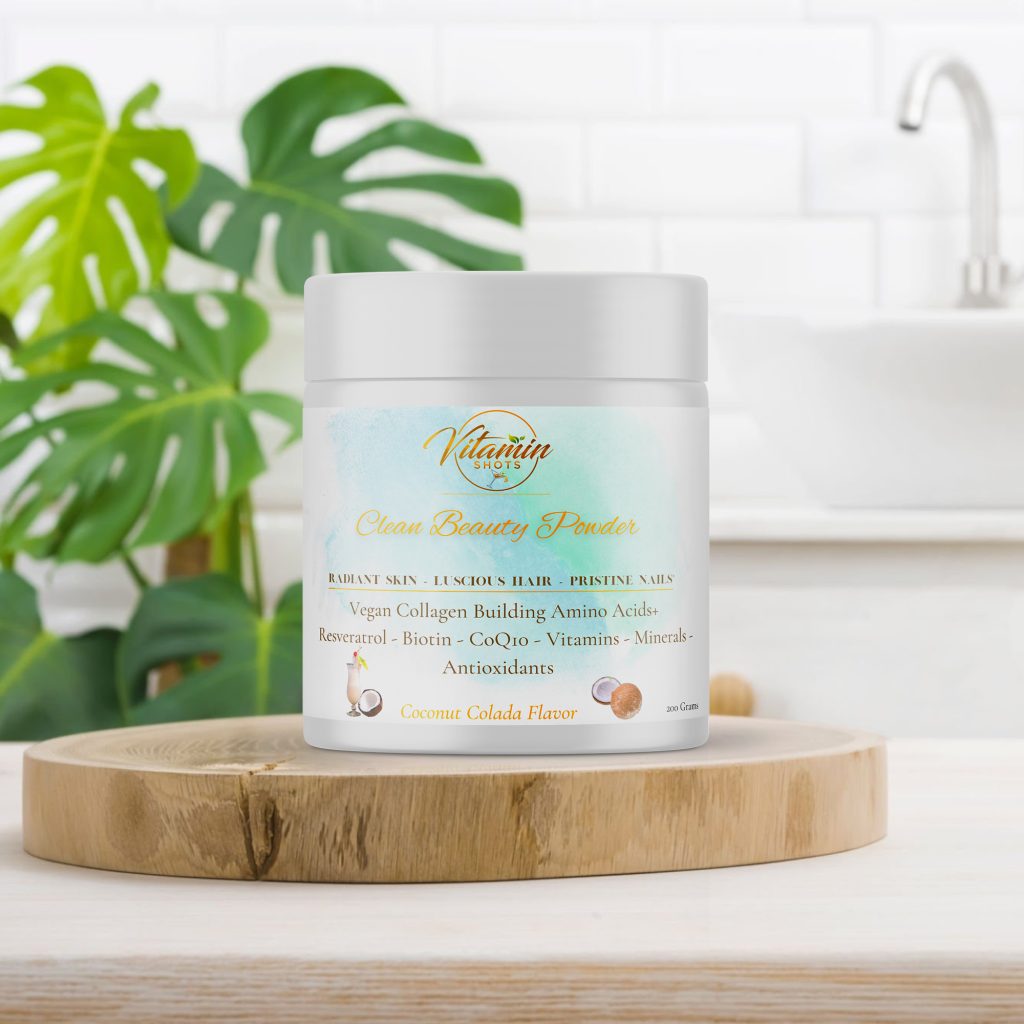
This is why our Glam Dust was formulated as the perfect partner to our cognitive energy shots. While your Vitamin Shot is fuelling your afternoon focus, Glam Dust delivers the collagen precursors, biotin, hyaluronic acid, and antioxidants that support your skin's radiance from within — because the brain-beauty connection is real, and both deserve your attention. And if you prefer your beauty nutrients sprinkled into your daily routine, our Vitamin Sprinkles offer the same skin-supporting micronutrient stack in an effortlessly versatile format — just add to any food or drink.[12]
For total brain + beauty support, our community's most popular combination is: Vitamin Shots for daily cognitive energy and B-vitamin nutrition → Glam Dust for skin, hair, and collagen support → Vitamin Sprinkles for convenient all-day micronutrient top-up. Find the right combination for your goals with our free supplement quiz →
The Vitamin Shots Perspective: Why We Built a Brainergy Formula
"The idea that your afternoon slump is a caffeine deficiency is one of the most profitable myths in the history of consumer products. Every time you reach for a 3 PM coffee, the coffee industry wins. But your brain doesn't."
We didn't create our Brainergy formula because nootropics were trending. We created it because the fundamental nutritional science is undeniable — and because we were watching clients spend years chasing energy with stimulants when what their brains actually needed was nutrition. The shift in cognitive function that users report when switching from afternoon coffee to our Vitamin Shots is not a placebo. It is what happens when the brain finally gets the raw materials it needs to run at full capacity.
Our formula prioritises methylated B vitamins (because synthetic forms are unusable by a significant portion of the population), liquid delivery (because absorption is the first problem to solve), and zero added sugar (because sugar creates the exact glycaemic crash you're trying to avoid). The result is clean, sustained afternoon cognitive energy — and evening calm — that most of our users describe as feeling like "what energy should actually feel like."
Your Afternoon Brainergy Protocol — A Practical Guide

Switching from afternoon coffee to a Brainergy shot protocol is straightforward — but the transition period matters. Here is the evidence-based approach our team recommends:
1 Stop afternoon caffeine after 12 PM
Given caffeine's 5–7 hour half-life, any coffee consumed after noon still has 25–50% of its dose active at bedtime. Cut the afternoon coffee first. You will likely feel worse for days 2–4 of this transition as your adenosine receptors normalise — this is expected and temporary.
2 Take your Brainergy shot at 1–2 PM
Liquid nootropic shots absorb fastest on a moderately empty stomach — ideally 30–60 minutes after lunch. This positions peak effect right at the 3 PM crash window. Take your Vitamin Shot consistently for at least 5 days before judging effect — some adaptogenic compounds take several days of use to fully manifest their benefits.
3 Add Glam Dust or Sprinkles to your morning
For full-spectrum support, pair your afternoon Brainergy shot with Glam Dust in the morning — its collagen, biotin, and antioxidant complex supports skin, hair, and morning energy, complementing the cognitive focus your afternoon Vitamin Shot provides. Or try Vitamin Sprinkles added to your morning smoothie, oatmeal, or yoghurt for a tasteless micronutrient boost that bridges the gap between meals.
4 Track the difference with the Wellness App
The Vitamin Shots Wellness App (free on iOS and Android with any subscription) includes energy and mood tracking that lets you visualise exactly how your afternoon cognitive performance changes over the first two weeks of your Brainergy protocol. Users consistently report the biggest improvements in mood, evening energy, and sleep quality by days 7–10.
| Time | Action | Why |
|---|---|---|
| 7–8 AM | Morning coffee (1 cup maximum) + Glam Dust in smoothie | Morning caffeine window is safe; Glam Dust delivers AM beauty nutrition |
| 12–1 PM | Last coffee of the day | Clears system before evening; protects sleep quality |
| 1–2 PM | Vitamin Shot — your Brainergy dose | 30–60 min after lunch for peak absorption; positioned for 3 PM window |
| 2:30–6 PM | Peak cognitive performance window | B vitamins + adaptogens + amino acids fully active — sustained focus without crash |
| Evening | No more caffeine; hydrate well | Cortisol normalises; sleep quality improves significantly |
Our 60-second supplement quiz asks about your energy patterns, cognitive goals, sleep quality, and lifestyle to recommend the exact Vitamin Shots product that fits your needs. Most new members find the right formula in their first try. Take the quiz now →
Ready to Ditch the 3 PM Crash for Good?
Join thousands of high performers who have replaced afternoon coffee with The Vitamin Shots. Free Wellness App included. Sugar-free, vegan, alcohol-free.
Frequently Asked Questions
What is a nootropic Brainergy shot?
A nootropic Brainergy shot is a concentrated liquid supplement formulated with cognitive-enhancing compounds — methylated B vitamins, adaptogens like Rhodiola and Panax Ginseng, amino acids like L-Theanine, and neurogenic compounds like Lion's Mane — designed to deliver sustained mental energy, focus, and clarity without the crash caused by caffeine. The Vitamin Shots range delivers these ingredients in bioavailable liquid form for maximum effect. Explore our formula →
Why does coffee cause an afternoon energy crash?
Coffee's energy effect works by blocking adenosine receptors — preventing the brain's "tiredness signals" from registering. But adenosine continues accumulating during this block. When caffeine is metabolised (4–6 hours after consumption), the accumulated adenosine floods receptors simultaneously, causing the crash. More caffeine extends the dam; it does not eliminate the flood. Our guide on chronic fatigue and vitamin deficiencies explains the nutritional side of this problem in detail.
What are the best nootropics for afternoon focus?
Evidence-backed nootropics for afternoon focus include methylcobalamin B12, L-Theanine, Panax Ginseng, Lion's Mane mushroom, P-5-P (active B6), and Rhodiola Rosea. The key is delivery format — liquid formulations deliver these compounds at 94–98% bioavailability versus 10–20% for standard capsules. See our post on Best Vitamins for Energy & Fatigue for the full evidence review.
Are nootropic shots safe to take daily?
Quality nootropic shots formulated with vitamins, adaptogens, and amino acids — rather than high-dose synthetic stimulants — are generally considered safe for daily use by healthy adults. All Vitamin Shots products are non-GMO, vegan, sugar-free, gluten-free, and alcohol-free. Always consult your healthcare provider if you have underlying health conditions or take medications.
How quickly do nootropic shots work compared to coffee?
Liquid nootropic shots begin absorbing through mucosal membranes within 5–15 minutes — comparable to or faster than coffee. However, unlike coffee's sharp spike, nootropic shots build to a smooth plateau sustained for 4–6 hours without a crash. Many users report noticeable focus improvement within 20–30 minutes of their Vitamin Shot.
Can I take nootropic shots alongside Glam Dust and Vitamin Sprinkles?
Absolutely. Vitamin Shots, Glam Dust, and Vitamin Sprinkles are specifically formulated to complement each other. Each targets a distinct set of pathways — cognitive energy, skin and beauty support, and all-day micronutrient coverage respectively. Use our supplement quiz to find your optimal combination.
References
- Raichle, M. E., & Gusnard, D. A. (2002). Appraising the brain's energy budget. Proceedings of the National Academy of Sciences, 99(16), 10237–10239. doi.org/10.1073/pnas.172399499
- American Psychological Association. (2023). Stress in America 2023: A Nation Recovering from Cumulative Stress. APA. apa.org
- Fredholm, B. B., Bättig, K., Holmén, J., Nehlig, A., & Zvartau, E. E. (1999). Actions of caffeine in the brain with special reference to factors that contribute to its widespread use. Pharmacological Reviews, 51(1), 83–133. pharmrev.aspetjournals.org
- Lovallo, W. R., Whitsett, T. L., al'Absi, M., Sung, B. H., Vincent, A. S., & Wilson, M. F. (2005). Caffeine stimulation of cortisol secretion across the waking hours in relation to caffeine intake levels. Psychosomatic Medicine, 67(5), 734–739. doi.org/10.1097/01.psy.0000181270.20036.06
- Giurgea, C. (1972). Vers une pharmacologie de l'activite integrative du cerveau. Actualités Pharmacologiques, 25, 115–156.
- Malík, M., & Tlustoš, P. (2022). Nootropics as cognitive enhancers: types, dosage and side effects of smart drugs. Nutrients, 14(16), 3367. doi.org/10.3390/nu14163367
- Kennedy, D. O. (2016). B vitamins and the brain: mechanisms, dose and efficacy — a review. Nutrients, 8(2), 68. doi.org/10.3390/nu8020068
- Nobre, A. C., Rao, A., & Owen, G. N. (2008). L-theanine, a natural constituent in tea, and its effect on mental state. Asia Pacific Journal of Clinical Nutrition, 17(Suppl 1), 167–168. pubmed.ncbi.nlm.nih.gov/18296328
- Reay, J. L., Kennedy, D. O., & Scholey, A. B. (2005). Single doses of Panax ginseng (G115) reduce blood glucose levels and improve cognitive performance during sustained mental activity. Journal of Psychopharmacology, 19(4), 357–365. doi.org/10.1177/0269881105053286
- Mori, K., Inatomi, S., Ouchi, K., Azumi, Y., & Tuchida, T. (2009). Improving effects of the mushroom Yamabushitake on mild cognitive impairment: a double-blind placebo-controlled clinical trial. Phytotherapy Research, 23(3), 367–372. doi.org/10.1002/ptr.2634
- Darbinyan, V., Kteyan, A., Panossian, A., et al. (2000). Rhodiola rosea in stress induced fatigue — a double blind cross-over study of a standardized extract SHR-5 with a repeated low-dose regimen on the mental performance of healthy physicians during night duty. Phytomedicine, 7(5), 365–371. doi.org/10.1016/S0944-7113(00)80055-0
- Schagen, S. K., Zampeli, V. A., Makrantonaki, E., & Zouboulis, C. C. (2012). Discovering the link between nutrition and skin aging. Dermato-Endocrinology, 4(3), 298–307. doi.org/10.4161/derm.22876
.
.png)