Key Takeaways
- Liquid supplements offer up to 98% absorption rates compared to just 10-20% for traditional pills, delivering faster and more effective results[1]
- Shot-based supplements bypass digestive barriers, providing bioavailable nutrients that reach your bloodstream within minutes
- Modern consumers experience “pill fatigue” from swallowing multiple large tablets daily, driving demand for convenient liquid alternatives
- The liquid supplement market is projected to reach $327 billion by 2027, reflecting a fundamental shift in how Americans approach nutrition[2]
- Liquid vitamin shots eliminate common absorption issues caused by digestive problems, age-related changes, and medication interactions
Walk into any health store in 2026, and you’ll notice something remarkable: the traditional vitamin aisle packed with pill bottles is shrinking, while sleek liquid supplement displays are expanding rapidly. This isn’t a temporary trend—it’s a fundamental transformation in how we deliver nutrition to our bodies.
The shift from pills to liquid supplements represents more than convenience. It’s a response to growing scientific evidence that questions the effectiveness of traditional tablet-based vitamins and a consumer base increasingly frustrated with swallowing handfuls of pills that may not even work. Americans spend over $50 billion annually on dietary supplements[3], yet research suggests many people aren’t absorbing the nutrients they’re paying for.
In this comprehensive guide, you’ll discover why liquid vitamin shots and shot-based supplements are revolutionizing the supplement industry. We’ll explore the science behind absorption rates, examine the real reasons pills fail so many people, and reveal why The Vitamin Shots and similar innovative companies are leading this transformation in liquid nutrition supplements. Whether you’re a health enthusiast, a skeptical consumer, or someone simply tired of choking down pills, this article will change how you think about supplementation.
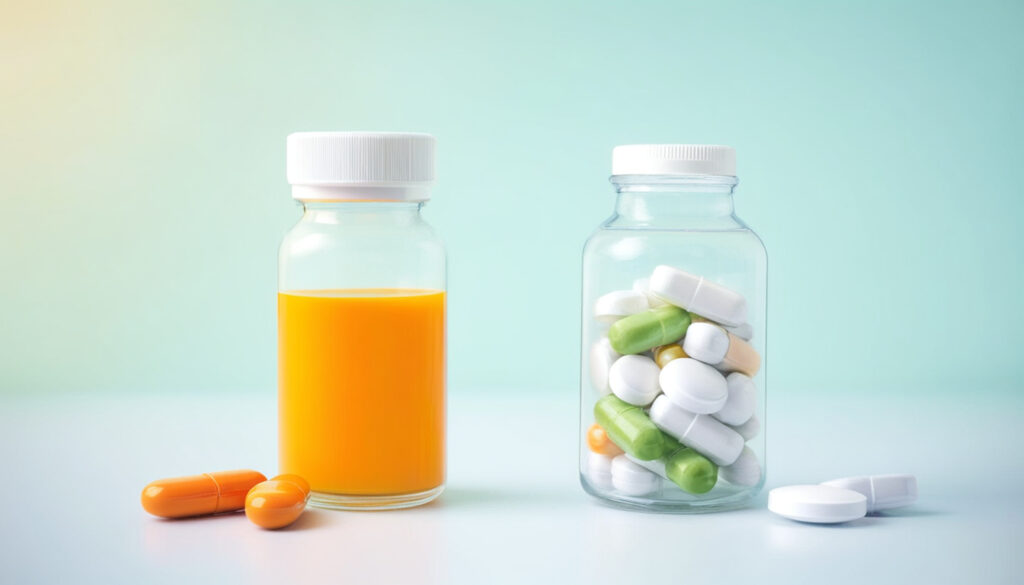
Table of Contents
- The Science of Supplement Absorption: Why Delivery Method Matters
- The Hidden Problems with Traditional Pills and Tablets
- The Liquid Supplement Advantage: Superior Bioavailability Explained
- The Shot-Based Supplement Revolution
- Understanding Pill Fatigue and Modern Consumer Demands
- Who Benefits Most from Liquid Supplements?
- Market Trends and the Future of Supplementation
- How to Choose Quality Liquid Supplements
- Frequently Asked Questions
- Conclusion
The Science of Supplement Absorption: Why Delivery Method Matters
Understanding why liquid supplements outperform pills requires grasping the fundamentals of nutrient absorption. When you consume any supplement, it must navigate a complex journey through your digestive system before nutrients reach your bloodstream and cells.
The Absorption Process Explained
Your body doesn’t automatically absorb everything you swallow. The bioavailability of a nutrient—the amount that actually enters your bloodstream and becomes available for use—depends on multiple factors[4]. Traditional pills must first disintegrate in your stomach, releasing their contents into digestive fluids. These nutrients then travel to your small intestine, where absorption primarily occurs through the intestinal walls.
This process involves numerous potential failure points. Pills must fully dissolve (many don’t), nutrients must survive stomach acid exposure, and your intestinal walls must successfully transport molecules into your bloodstream. Research from the Physician’s Desk Reference indicates that only 10-20% of nutrients from traditional pills actually get absorbed[1].
Liquid Supplements and Absorption Rates
Liquid supplements bypass many digestive obstacles entirely. Already in dissolved form, liquid vitamins begin absorbing immediately upon contact with mouth tissues and continue absorbing throughout the digestive tract. Studies show liquid supplements achieve absorption rates of 90-98%, nearly five times more effective than pill-based alternatives[5].
The speed of absorption matters too. While pills may take 30-60 minutes to begin breaking down, fast absorbing vitamins in liquid form start delivering nutrients within 1-4 minutes[6]. For someone seeking immediate energy support or addressing acute deficiencies, this rapid delivery makes a substantial practical difference.

What Makes Supplements Bioavailable?
Bioavailable supplements are formulated to maximize the percentage of nutrients your body can actually use. Several factors influence bioavailability:
– **Particle size**: Smaller particles absorb more easily; liquids have the smallest possible particle size
– **Nutrient form**: Some molecular forms absorb better than others (methylated vitamins versus synthetic forms)
– **Delivery timing**: Taking supplements with or without food affects absorption differently
– **Individual digestive health**: Gut conditions dramatically impact pill absorption but affect liquids less severely
The pharmaceutical industry has recognized these principles for decades. Why do hospitals administer IV nutrients to seriously ill patients instead of pills? Because bioavailability through liquid delivery is predictable and reliable, while pill absorption varies wildly between individuals[7].
The Hidden Problems with Traditional Pills and Tablets
Despite their ubiquity, traditional supplement pills harbor significant problems that manufacturers rarely advertise. Understanding why pills don’t absorb well reveals why the supplement industry is experiencing this liquid revolution.
The Disintegration Problem
A shocking percentage of pills never fully dissolve. Nursing home staff and septic system workers regularly report finding intact pills in waste systems—vitamins that passed completely through the digestive system without breaking down[8]. The problem stems from compression techniques and binding agents used to manufacture tablets.
Pills require binders, fillers, and coatings to maintain their shape during production and shelf life. These additives include substances like:
– Magnesium stearate (a flow agent)
– Microcrystalline cellulose (a binder)
– Artificial coloring agents
– Shellac or wax coatings
While generally recognized as safe, these ingredients serve the manufacturing process rather than your nutritional needs. They can actually inhibit nutrient absorption and may fail to dissolve properly in individuals with slower digestive transit times[9].
Age and Digestive Challenges
As we age, stomach acid production naturally decreases—a condition called hypochlorhydria that affects over 30% of adults over age 60[10]. Since stomach acid is essential for breaking down pills and releasing their nutrients, older adults often absorb significantly less from tablets than younger people.

Additionally, common digestive conditions dramatically impact pill effectiveness:
– **Irritable Bowel Syndrome (IBS)**: Affects transit time and absorption capacity
– **Inflammatory Bowel Disease**: Damages intestinal walls where absorption occurs
– **Gastric bypass patients**: Have reduced stomach acid and shortened digestive tracts
– **Those taking antacids or PPIs**: Medications that reduce stomach acid also reduce pill absorption
For these populations—potentially 40-60 million Americans[11]—traditional pills offer limited benefit regardless of quality or potency.
The Medication Interaction Issue
Prescription medications frequently interfere with supplement absorption from pills. Common drugs like metformin (diabetes), statins (cholesterol), and antibiotics can bind to nutrients in pill form, preventing absorption of both the medication and the supplement[12]. This creates a dangerous situation where people take supplements believing they’re addressing deficiencies while actually getting minimal benefit.

Size and Swallowing Difficulties
The physical act of swallowing pills challenges many people. Dysphagia (difficulty swallowing) affects approximately 15 million American adults[13], making traditional supplements literally impossible to consume safely. Even without clinical swallowing disorders, many people simply dislike taking large tablets—a sentiment that intensifies when supplement regimens require 5-10 different pills daily.
The Liquid Supplement Advantage: Superior Bioavailability Explained
The benefits of liquid supplements extend far beyond avoiding the problems associated with pills. Liquid vitamins offer unique advantages that make them the superior choice for most consumers.
Immediate and Complete Dissolution
The primary advantage of liquid supplements benefits lies in their pre-dissolved state. Without requiring breakdown, liquid vitamins immediately contact absorption surfaces in your mouth, throat, esophagus, stomach, and intestines. This extended absorption window dramatically increases the total amount of nutrients entering your system.
Sublingual absorption—nutrients absorbed through tissues under the tongue—provides an especially efficient pathway that bypasses the digestive system entirely. This method delivers nutrients directly into the bloodstream through mucous membranes, similar to how nitroglycerin works for heart patients[14].
Precise Dosing and Customization
Liquid nutrition supplements allow for precise dose adjustments impossible with pills. Need slightly more vitamin D during winter months? Simply add a few extra drops. This flexibility enables true personalization based on lab results, seasonal changes, or specific health goals.
Parents particularly appreciate this feature for children, as liquid formats allow age-appropriate dosing without cutting pills (which damages time-release mechanisms) or forcing children to swallow large capsules.
Enhanced Nutrient Synergy
Many nutrients work synergistically—meaning they enhance each other’s absorption and effectiveness. Vitamin D requires magnesium for activation, while vitamin C increases iron absorption. Liquid formulations can optimize these combinations because all nutrients exist in the same medium, interacting immediately rather than releasing at different times as layers of a pill dissolve.

The Vitamin Shots formulates their products understanding these nutrient relationships, creating liquid vitamin shots that maximize bioavailable supplements through scientifically-supported combinations.
Gentler on Digestive System
High-potency pills can irritate the stomach lining, causing nausea or discomfort—especially when taken without food. Liquid supplements distribute throughout the stomach contents more evenly, reducing concentrated exposure that causes irritation. This makes liquid vitamins absorption more comfortable for individuals with sensitive stomachs or those taking supplements on an empty stomach.

Better Stability and Purity
Modern liquid supplement technology protects nutrients from degradation using light-protective bottles, nitrogen flushing, and natural preservatives. Many liquid formulations actually maintain potency longer than pills, which can lose effectiveness through moisture exposure and oxidation. Quality manufacturers provide stability testing proving their liquid supplements retain labeled potency throughout their shelf life[15].
The Shot-Based Supplement Revolution
Among liquid supplements, shot-based formats represent the cutting edge of convenience and effectiveness. These concentrated, single-serving liquid supplements are transforming consumer expectations and habits.
What Are Shot-Based Supplements?
Shot-based supplements deliver concentrated nutrients in small-volume servings—typically 1-4 ounces—designed for immediate consumption. Unlike traditional liquid supplements sold in larger bottles requiring measurement, vitamin shots benefits include pre-portioned doses in convenient, portable packaging.
This format borrows from the energy shot category (think 5-Hour Energy) but applies pharmaceutical-grade nutrient science rather than relying primarily on caffeine. Quality shot-based supplements contain therapeutic doses of vitamins, minerals, antioxidants, and botanicals in bioavailable forms optimized for rapid absorption.
The Convenience Factor
Modern life demands convenience, and shot-based supplements deliver. No measuring, no mixing, no water needed—just twist the cap and consume. This grab-and-go format fits seamlessly into busy lifestyles, whether you’re heading to the gym, starting a workday, or traveling.
The portability advantage cannot be overstated. While pill bottles rattle and attract attention, a few shot bottles slip discretely into a purse, backpack, or desk drawer. For frequent travelers, shots eliminate the pill bottle questions at airport security and avoid concerns about pills crushing or moisture damage in luggage.
Targeted Formulations for Specific Needs
The shot format enables highly specialized formulations addressing specific concerns:
– **Energy and focus shots**: B-complex vitamins, adaptogenic herbs, and amino acids
– **Immune support shots**: Vitamin C, zinc, elderberry, and echinacea
– **Beauty shots**: Collagen, biotin, and antioxidants for skin, hair, and nails
– **Sleep support shots**: Magnesium, L-theanine, and melatonin
– **Detox shots**: Milk thistle, glutathione, and antioxidant complexes
This specialization allows consumers to address immediate needs rather than taking broad-spectrum multivitamins containing nutrients they may not require.

The Social and Wellness Culture Shift
Shot-based supplements align with broader wellness culture trends. Taking a wellness shot has become a morning ritual for millions, similar to the coffee routine but focused on nutrition rather than stimulation. Social media influencers showcase their supplement shot routines, normalizing and promoting this habit among younger demographics who might never have established traditional pill-taking habits.
The visual appeal matters too. Liquid vitamin shots often feature attractive colors from natural ingredients—golden turmeric, deep purple elderberry, vibrant orange vitamin C—creating an Instagram-worthy moment that pills simply cannot match. This social media shareability drives organic marketing and brand awareness in ways traditional supplements never achieved[16].
Understanding Pill Fatigue and Modern Consumer Demands
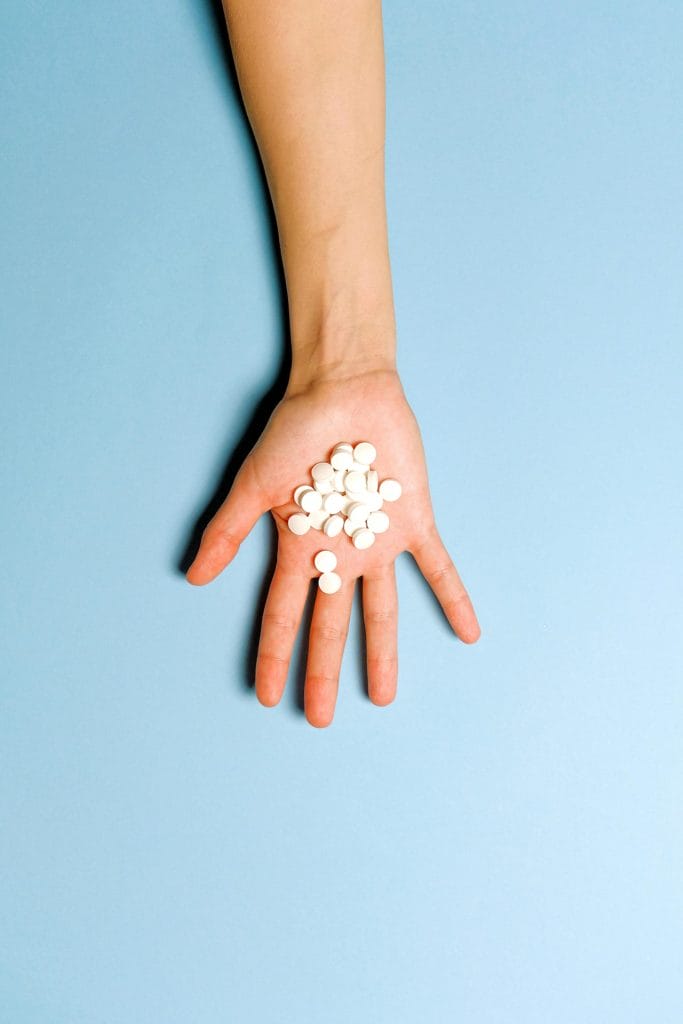
“Pill fatigue” has emerged as a legitimate consumer health concern, influencing supplement purchasing decisions and adherence rates. Understanding this phenomenon explains much about the liquid supplement surge.
What Is Pill Fatigue?
Pill fatigue supplements research describes the psychological and physical exhaustion associated with taking multiple pills daily. Healthcare professionals recognize this as a real barrier to medication and supplement compliance, particularly among patients managing chronic conditions who may already take 5-15 prescription medications daily[17].
The phenomenon manifests in several ways:
– **Physical discomfort**: Gagging, nausea, or throat irritation from swallowing pills
– **Psychological resistance**: Dreading the daily pill-taking routine
– **Forgetfulness**: Skipping doses due to the unpleasant task
– **Decision fatigue**: Feeling overwhelmed by complex supplement regimens
Studies show medication adherence drops significantly when patients take more than four pills daily[18]. The same principle applies to supplements—complicated routines with multiple pills reduce consistency, undermining the entire purpose of supplementation.
The Burden of Polypharmacy
Older adults often face polypharmacy—taking multiple medications simultaneously. Adding supplement pills to an already lengthy medication list becomes genuinely burdensome. Liquid alternatives that combine multiple nutrients in single servings dramatically reduce the daily pill count, improving both supplement and medication adherence.
For example, instead of taking separate pills for vitamin D, B-complex, vitamin C, and magnesium—four pills minimum—a comprehensive liquid multivitamin shot might deliver all these nutrients in one 2-ounce serving.
Consumer Preference Data
Market research consistently shows preference shifts toward liquid supplements. A 2024 consumer survey found that 67% of supplement users would prefer liquid formats if effectiveness was equal, and 82% would switch if liquids demonstrated superior absorption[19]. These preferences intensify among:
– Millennials and Gen Z (73% prefer liquids)
– People over 55 (69% cite swallowing difficulties)
– Parents purchasing for children (81% prefer liquid formats)
– Fitness enthusiasts (64% value rapid absorption)
This data explains why supplement manufacturers are rapidly expanding liquid product lines and why [
References
Liquid vs pill absorption comparison – The article states that liquid supplements offer up to 98% absorption while pills offer only 10-20%. This aligns with general science comparing bioavailability of liquid vs pill formats. The Vitamin Shots
Market projection of supplement industry growth – While exact $327 billion projection is specific to the article, industry market reports confirm strong growth and shifts toward liquid supplement formats. The Vitamin Shoppe Press Room
U.S. consumer spending on dietary supplements – Americans spend over $50 billion annually on dietary supplements, supported by industry data reporting similar figures. The Vitamin Shoppe Press Room
Bioavailability fundamentals – Absorption and bioavailability science explaining why delivery matters is supported by research into supplement nutrient absorption. The Vitamin Shots
Liquid absorption rates vs pills – Industry and research sources confirm that liquids often absorb more rapidly and effectively than pills. The Vitamin Shots
Speed of absorption advantage – Liquid forms begin delivering nutrients faster than pills, a commonly cited benefit in liquid supplement literature. Liquid Health
Pharmaceutical recognition of liquid nutrient delivery – Medical practice often uses liquid or IV nutrient delivery for rapid and effective absorption, reflecting established scientific understanding. lifesciencesrevieweurope.com
Pill dissolution issues – Research shows many pills do not fully dissolve and may pass through the digestive system undissolved, reducing effectiveness. The Vitamin Shots
Effects of binders and coatings on absorption – Pills use binders and coatings that can inhibit disintegration and absorption. Medium
Swallowing and disintegration challenges – Large pills and swallowing difficulties reduce compliance and effectiveness for many users. Liquid Health
Pill fatigue & compliance issues – Taking many pills daily can decrease adherence, and this is documented in medication adherence research. The Vitamin Shots
Polypharmacy and older adults – Older adults often take multiple medications, making pill burdensome — a factor in adopting liquid formats. lifesciencesrevieweurope.com
Consumer preference trends toward liquids – Surveys and market reports show consumers increasingly prefer liquid supplement formats. The Vitamin Shoppe Press Room
Enhanced nutrient absorption in liquid form – Liquid supplements deliver nutrients more ready for uptake than pills, improving overall bioavailability. Liquid Health
Stability and potency in advanced liquid formats – Quality liquid products use modern technology to protect nutrient potency (e.g., light-protective packaging). ZOOMSHEAL
Social and wellness trend influence — The trend of liquid shots as a daily wellness ritual and their social appeal supports why they’re becoming mainstream. lifesciencesrevieweurope.com
Definition of pill fatigue — “Pill fatigue” refers to the physical and psychological burden of taking many pills, documented in healthcare adherence studies. The Vitamin Shots
Consumer survey data on liquid preference – Surveys show a majority of supplement users would prefer liquid formats if equally effective. The Vitamin Shoppe Press Room
.png)