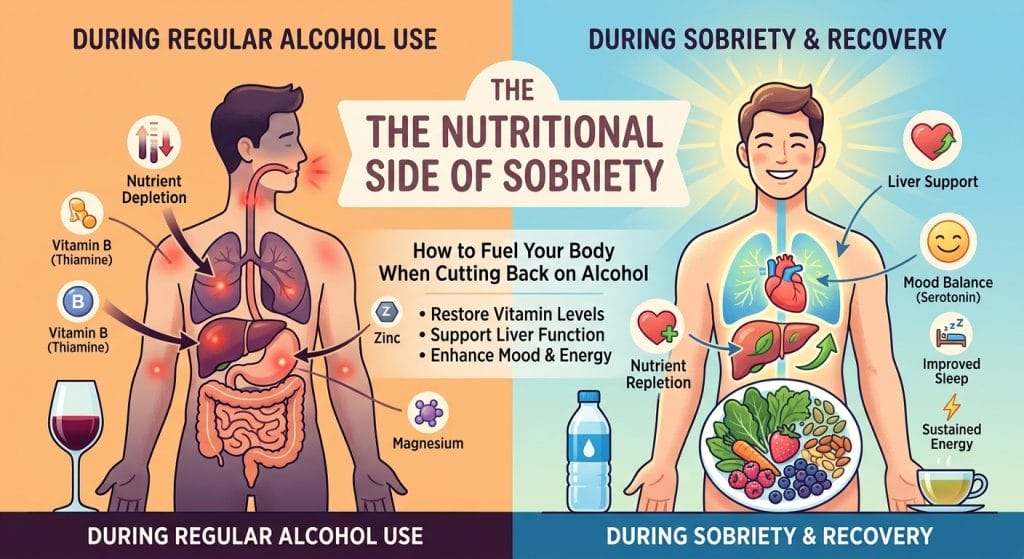
The sober-curious movement has exploded over the past several years, and most of the content written for it focuses on the psychological and social side — how to handle social pressure, what to order at a bar, how to explain your choice to friends. What gets almost no attention is the nutritional side of cutting back or quitting alcohol entirely. Chronic alcohol use depletes specific vitamins and minerals in ways most people never learn about, and the recovery period after reducing or stopping alcohol comes with its own distinct nutritional needs — for sleep, mood, liver support, and energy. This guide covers what actually happens nutritionally when you drink regularly, what your body needs to recover and rebuild once you cut back, and how to support your body through the transition with evidence-based nutrition rather than guesswork.
The quick answer: what alcohol depletes, and what helps
Regular alcohol consumption depletes B vitamins (especially B1/thiamine, B6, B9/folate, and B12), magnesium, zinc, and vitamin C — largely through impaired absorption, increased urinary excretion, and the liver prioritizing alcohol metabolism over normal nutrient processing.
When cutting back or quitting, the most commonly reported challenges are sleep disruption, mood fluctuation, low energy, and cravings — several of which are directly connected to the nutrient depletions above and can be meaningfully supported nutritionally.
Save this article for later
Enter your email and we'll send you a direct link — no account needed.
Liver support nutrients (B vitamins, antioxidants, choline) and magnesium for sleep and mood are the two highest-priority additions for most people during the transition to drinking less or not at all.
What this article covers
- What regular alcohol consumption actually depletes
- Why alcohol causes these specific deficiencies
- What happens nutritionally in the first weeks of cutting back
- B vitamins: the biggest depletion, and why it matters
- Liver support: what the science actually says
- Sleep and mood: the magnesium connection
- Rebuilding: a practical nutritional approach
- When to see a doctor instead of self-managing
- Frequently asked questions
What regular alcohol consumption actually depletes
Alcohol is not nutritionally neutral. Beyond its caloric content (7 calories per gram, more than carbohydrates or protein), regular consumption interferes with the absorption, metabolism, storage, or excretion of a specific and well-documented set of nutrients [1]:
- Thiamine (Vitamin B1): One of the most significant and well-studied alcohol-related deficiencies. Alcohol impairs thiamine absorption in the small intestine and reduces the liver's ability to store it.
- Vitamin B6: Alcohol accelerates the breakdown of the active form of B6 in the blood.
- Folate (Vitamin B9): Alcohol impairs folate absorption in the intestine and increases urinary folate excretion.
- Vitamin B12: Chronic alcohol use is associated with reduced B12 absorption, compounding with the other B-vitamin effects.
- Magnesium: Alcohol increases magnesium excretion through the kidneys significantly.
- Zinc: Both alcohol metabolism itself and impaired absorption contribute to lower zinc status in regular drinkers.
- Vitamin C: Chronic alcohol use is associated with lower vitamin C status, partly due to increased oxidative stress consuming the body's antioxidant reserves faster.
- Vitamin A: The liver enzymes used to metabolize alcohol also compete with vitamin A metabolism pathways, and chronic use can deplete liver vitamin A stores.
These depletions occur on a spectrum related to quantity and frequency of alcohol consumption — someone having an occasional drink faces minimal risk, while regular, heavier consumption over months or years produces more measurable and clinically significant deficiencies.
Why alcohol causes these specific deficiencies

There are four distinct biological mechanisms at play, and understanding them explains why the nutritional impact of alcohol goes well beyond "empty calories":
1. Impaired intestinal absorption
Alcohol directly damages the lining of the small intestine, where most nutrient absorption takes place. This is particularly significant for thiamine and folate, both of which rely on specific transport mechanisms in the intestinal lining that alcohol disrupts [2].
2. Competition for liver metabolism
The liver treats alcohol as a priority substance to metabolize and detoxify, which means normal nutrient processing (including activating certain vitamins into their usable forms) gets deprioritized while alcohol is being processed.
3. Increased urinary excretion
Alcohol has a diuretic effect — it suppresses a hormone (vasopressin) that normally helps your kidneys retain water, which increases urination and, along with it, the loss of water-soluble vitamins and minerals like magnesium, zinc, and B vitamins.
4. Increased oxidative stress
Alcohol metabolism generates reactive oxygen species (free radicals) as a byproduct, which consumes the body's antioxidant reserves — particularly vitamin C and glutathione — faster than normal.
What happens nutritionally in the first weeks of cutting back

The early period of reducing or eliminating alcohol involves the body recalibrating several systems simultaneously, and understanding what's happening can make the transition considerably easier.
Sleep disruption
Alcohol initially sedates but disrupts REM sleep and overall sleep architecture. Many people find their sleep quality actually improves within 1-2 weeks of stopping, but some report a temporary worsening in the first several days as the body recalibrates its natural sleep-wake cycle without alcohol's sedative effect.
Mood fluctuation
Alcohol affects GABA and glutamate — the brain's primary inhibitory and excitatory neurotransmitter systems. Regular use shifts the baseline balance of these systems, and removing alcohol requires a recalibration period that can include irritability, anxiety, or mood swings for some people during the first few weeks.
Energy and blood sugar changes
Alcohol affects blood sugar regulation, and regular drinkers sometimes rely on alcohol's caloric content without realizing it. Removing that source can temporarily affect energy levels until eating patterns adjust.
Cravings
Cravings are a normal part of behavior change and are addressed most effectively through behavioral strategies and, when appropriate, professional support — nutrition plays a supporting role but is not a primary treatment for cravings or dependence.
Important distinction: If you have been drinking heavily and regularly for an extended period, stopping abruptly can carry serious medical risks, including alcohol withdrawal syndrome, which can be dangerous or life-threatening in severe cases. This article addresses nutritional support for people reducing moderate drinking or already in a stable period of sobriety — not acute withdrawal management, which requires medical supervision. See the "When to see a doctor" section below.
B vitamins: the biggest depletion, and why it matters
Of all the nutrients affected by alcohol, the B-vitamin complex deserves the most attention — both because the depletion is well-documented and because the consequences of deficiency are significant.
Thiamine (B1) specifically
Severe, prolonged thiamine deficiency related to alcohol use is associated with a serious neurological condition called Wernicke-Korsakoff syndrome, which underscores how significant this particular depletion can become in heavy, chronic use [3]. This is a medical condition requiring physician involvement — it is not something to self-diagnose or self-treat, and it's mentioned here specifically so readers understand why thiamine gets particular attention in alcohol-related nutrition research.
What adequate B-complex intake supports during the transition
- Energy metabolism: B vitamins are essential cofactors in converting food into usable cellular energy — relevant given the energy fluctuations described above
- Nervous system function: B6, B12, and folate all play direct roles in neurotransmitter synthesis and nerve function
- Red blood cell production: B12 and folate are both required for healthy red blood cell formation
Best forms and sources
A B-complex that includes methylcobalamin (active B12) and methylfolate (active folate) is generally preferred over cyanocobalamin and folic acid, since these active forms don't require additional conversion steps in the liver — relevant given that liver function may already be under increased demand. Food sources include whole grains, legumes, leafy greens, and nutritional yeast for those following a plant-based diet.
Liver support: what the science actually says

The liver bears the primary metabolic burden of processing alcohol, and supporting it nutritionally during a period of reducing or eliminating alcohol is one of the more evidence-grounded areas of this topic.
What genuinely has research support
- Choline: Plays a direct, well-established role in preventing fat accumulation in the liver (a condition called hepatic steatosis). The NIH specifically notes that choline deficiency contributes to this condition, and alcohol use is itself a separate risk factor for the same outcome — making adequate choline intake relevant during this transition [4].
- B vitamins broadly: As covered above, directly support the liver's metabolic workload.
- Antioxidants (Vitamin C, E, selenium): Support the liver's own antioxidant systems, which are taxed by the oxidative stress alcohol metabolism generates.
- Adequate protein and amino acids: The liver requires amino acids for numerous repair and synthesis processes, including glutathione production, one of the body's primary internal antioxidants.
What has weaker or more preliminary evidence
Many "liver detox" or "liver cleanse" products marketed with proprietary herbal blends (milk thistle, dandelion root, and similar ingredients) have more limited and mixed clinical evidence specifically for alcohol-related liver support compared to the foundational nutrients above. This doesn't mean they're necessarily ineffective, but the evidence base is considerably thinner than for choline, B vitamins, and antioxidants — worth knowing before paying a premium for a "detox" formula over a well-formulated multivitamin.
The liver's own regenerative capacity is genuinely remarkable — this is one of the few organs capable of significant self-repair, and reducing or eliminating alcohol intake is, by a wide margin, the single most impactful thing anyone can do to support that natural regenerative process. Nutrition plays a supporting role, not a replacement role.
Sleep and mood: the magnesium connection
Magnesium deserves specific attention in this context because it sits at the intersection of two of the most commonly reported challenges during the alcohol-reduction transition: sleep and mood.
Why magnesium specifically
Magnesium is involved in regulating the same GABA neurotransmitter system that alcohol affects, and it plays a well-documented role in sleep architecture and stress response regulation [5]. Given that alcohol significantly depletes magnesium through increased urinary excretion, and that magnesium independently supports the same neurological systems disrupted during the transition period, this is one of the more mechanistically logical nutrients to prioritize.
What the research shows on magnesium and sleep
Multiple studies have examined magnesium supplementation for sleep quality, particularly in populations with lower baseline magnesium status, with generally positive though modest findings [6]. Magnesium glycinate and magnesium citrate are commonly preferred forms for this purpose, with glycinate specifically noted for good absorption and minimal digestive side effects.
Realistic expectations
Magnesium supplementation is a reasonable, well-supported piece of a broader nutritional approach — it is not a sleep aid replacement or a guaranteed fix for alcohol-related sleep disruption, which often resolves gradually over 2-4 weeks as the body's natural sleep architecture recalibrates.
Rebuilding: a practical nutritional approach

Bringing the above research together into something actionable, here's a practical nutritional framework for the alcohol-reduction transition:
Priority nutrients to focus on
- B-complex with active forms (methylcobalamin, methylfolate) — addresses the most well-documented depletion
- Magnesium (300-400 mg/day, glycinate or citrate form) — supports sleep and mood during the transition
- Zinc — supports immune function and is commonly depleted
- Choline — supports liver function specifically
- Vitamin C — replenishes antioxidant reserves
- Adequate protein — supports amino acid availability for liver repair processes and general recovery
Practical daily habits that support the transition
- Prioritize consistent sleep and wake times, since sleep architecture is actively recalibrating
- Stay well-hydrated, particularly in the first 1-2 weeks
- Eat regular, balanced meals to support stable blood sugar, particularly if alcohol was previously a caloric habit
- Consider a comprehensive daily multivitamin that covers the B-complex, magnesium, zinc, and choline needs above in a single serving rather than managing multiple separate supplements
- Be patient — most of the nutritional recalibration described in this article occurs over 2-8 weeks, not days
A comprehensive formula that includes B-complex, magnesium, zinc, and choline in a single daily serving — like The Vitamin Shots, which is alcohol-free by design — can simplify covering these bases during the transition rather than assembling multiple separate supplements. For those who prefer a different delivery format, Vitamin Sprinkles offers similar nutritional coverage.
When to see a doctor instead of self-managing
This article is written for people reducing moderate alcohol intake or already in a stable period of not drinking. It is important to recognize situations that require professional medical involvement rather than self-directed nutritional support:
- If you have been drinking heavily and regularly (daily or near-daily, particularly in larger quantities) and are planning to stop, consult a doctor before doing so. Abrupt cessation after heavy, prolonged use can trigger alcohol withdrawal syndrome, which can include serious and potentially life-threatening symptoms.
- If you experience tremors, severe anxiety, confusion, hallucinations, or seizures when reducing or stopping alcohol, seek emergency medical care immediately.
- If you have any underlying liver condition, work with a physician on your nutritional approach rather than self-directing based on general guides like this one.
- If you're unsure whether your drinking pattern qualifies as "heavy," a conversation with your doctor or a brief validated screening tool can clarify this — self-assessment in this area is often unreliable.
Nutritional support, including everything discussed in this article, is a complement to — never a substitute for — appropriate medical care when it's needed.
Frequently asked questions
Which vitamins does alcohol deplete the most?
The B-vitamin complex is the most significantly and consistently depleted group, particularly thiamine (B1), B6, folate (B9), and B12. Magnesium, zinc, and vitamin C are also commonly depleted with regular alcohol consumption.
How long does it take for nutrient levels to recover after stopping drinking?
This varies by nutrient and by how significant the depletion was. Some markers, like blood magnesium and zinc, can improve within a few weeks of reduced intake combined with adequate dietary sources. More significant deficiencies, particularly of thiamine in heavy long-term drinkers, may take longer and should be evaluated by a physician with blood testing rather than assumed to have resolved.
Why do I sleep worse in the first week of not drinking?
Alcohol initially sedates but significantly disrupts REM sleep and overall sleep architecture. When you stop, your body's natural sleep-wake regulation system needs a recalibration period, which can temporarily worsen sleep for some people before improving — typically within 1-2 weeks. Magnesium supplementation and consistent sleep-wake timing can support this transition.
Do liver detox supplements actually work for alcohol-related liver support?
The foundational nutrients with the strongest evidence for liver support are choline, B vitamins, antioxidants (vitamin C, E, selenium), and adequate protein. Many proprietary "liver detox" blends with herbal ingredients like milk thistle have more limited and mixed clinical evidence specifically for alcohol-related liver support compared to these foundational nutrients.
Is it safe to stop drinking abruptly?
For occasional or light drinkers, generally yes. For people who have been drinking heavily and regularly over an extended period, abrupt cessation can trigger alcohol withdrawal syndrome, which can include serious and potentially life-threatening symptoms in severe cases. Anyone with a heavy, regular drinking pattern should consult a doctor before stopping.
What does magnesium actually do for alcohol-related sleep and mood issues?
Magnesium is involved in regulating the GABA neurotransmitter system, the same system alcohol affects, and plays a documented role in sleep architecture and stress response. Since alcohol significantly depletes magnesium, and magnesium independently supports the neurological systems disrupted during the transition, it's one of the more mechanistically relevant nutrients for this specific situation.
Can nutrition alone help with alcohol cravings?
Nutrition plays a supporting role in overall wellbeing during the transition, but cravings are best addressed through behavioral strategies and, when appropriate, professional support such as counseling or structured programs. Nutrition should be viewed as a complementary piece of a broader approach, not a primary treatment for cravings or dependence.
What is Wernicke-Korsakoff syndrome and should I be worried about it?
It's a serious neurological condition associated with severe, prolonged thiamine deficiency, most commonly seen in the context of long-term heavy alcohol use. It's mentioned here to illustrate how significant thiamine depletion can become in heavy chronic use, not as something the average person cutting back on moderate drinking needs to worry about. It requires medical diagnosis and treatment, not self-management.
Does choline really help with liver health specifically?
Yes, choline has a well-established, NIH-documented role in preventing fat accumulation in the liver. Since alcohol use is itself a separate risk factor for liver fat accumulation, ensuring adequate choline intake is a reasonable and evidence-supported piece of nutritional support during this transition.
How much of this applies to someone who just drinks occasionally, not heavily?
The nutrient depletions described in this article occur on a spectrum related to quantity and frequency. Someone having an occasional drink faces minimal nutritional risk. This article is most directly relevant to people who have been drinking regularly (whether moderately or heavily) and are now reducing or eliminating alcohol, and to people already in a stable period of sobriety who want to understand what nutritional support may still be relevant.

References & sources
- National Institute on Alcohol Abuse and Alcoholism. Alcohol's Effects on the Body. niaaa.nih.gov
- Lieber CS. Relationships between nutrition, alcohol use, and liver disease. Alcohol Research & Health. 2003;27(3):220-231.
- Sechi G, Serra A. Wernicke's encephalopathy: new clinical settings and recent advances in diagnosis and management. The Lancet Neurology. 2007;6(5):442-455.
- National Institutes of Health, Office of Dietary Supplements. Choline — Fact Sheet for Health Professionals. ods.od.nih.gov
- National Institutes of Health, Office of Dietary Supplements. Magnesium — Fact Sheet for Health Professionals. ods.od.nih.gov
- Abbasi B, Kimiagar M, Sadeghniiat K, et al. The effect of magnesium supplementation on primary insomnia in elderly: A double-blind placebo-controlled clinical trial. Journal of Research in Medical Sciences. 2012;17(12):1161-1169.
- National Institute on Alcohol Abuse and Alcoholism. Alcohol Withdrawal. niaaa.nih.gov
.png)