The Hidden Sugar in “Healthy” Supplements (And How to Spot It)
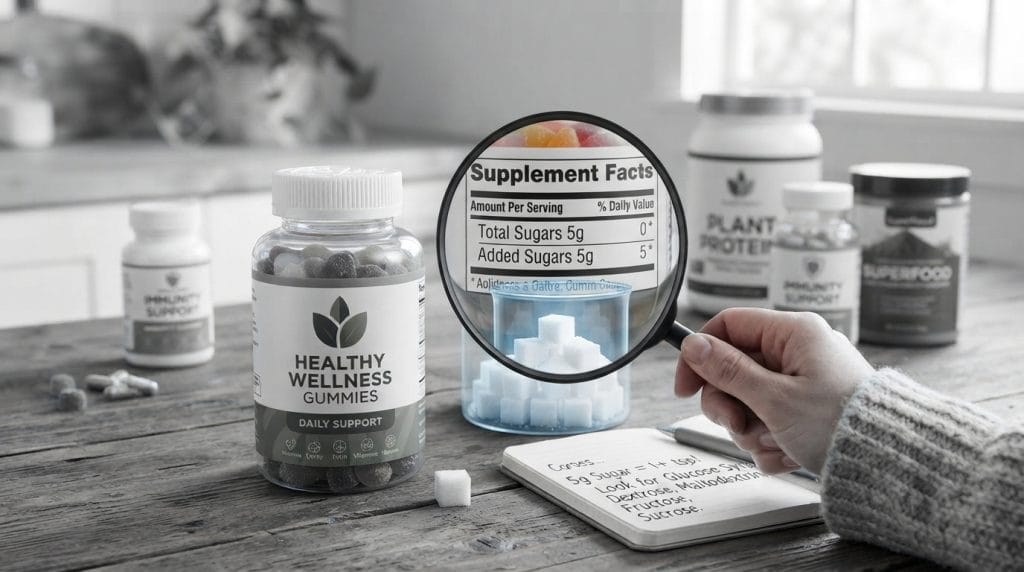
A By Ammar · Pre-medical student, biology & nutritional science Fact-checked · Updated 2026 · 13 min read · Editorial disclosure Walk down any supplement aisle and you’ll see the word “healthy” attached to products that quietly contain more sugar than a candy bar per serving. Gummy vitamins, “wellness” drink mixes, flavored protein powders, and even some multivitamins marketed as clean or natural routinely hide added sugars behind label terms most people don’t recognize. This isn’t a conspiracy — it’s a labeling loophole most consumers have never been taught to spot. This guide breaks down exactly where hidden sugar shows up in the supplement industry, the 15+ ingredient names sugar hides behind on a label, why gummy vitamins are the biggest offender, and how to actually read a Supplement Facts panel like someone who knows what they’re looking at. The quick answer: where sugar hides in supplements Gummy vitamins are the single biggest source of hidden sugar in the supplement industry — a typical adult gummy vitamin serving (2-4 gummies) can contain 2-8 grams of added sugar, and many brands require 2-3 servings to hit the labeled dose, multiplying that sugar intake. Sugar hides behind more than 15 different label names including cane syrup, tapioca syrup, corn syrup, dextrose, maltodextrin, fruit juice concentrate, and “organic sugar” — all of which function identically to regular table sugar in the body. The fix: check the Supplement Facts panel’s “Total Sugars” line directly rather than trusting front-of-package claims like “natural” or “made with real fruit,” and consider sugar-free liquid or capsule formats if daily sugar intake matters to you. What this article covers Why supplement companies add sugar in the first place The gummy vitamin sugar problem, with real numbers 15+ names sugar hides behind on a label Where else hidden sugar shows up Why hidden sugar in supplements actually matters How to read a Supplement Facts panel like a pro 5 marketing phrases that often signal hidden sugar What sugar-free supplement formats look like Frequently asked questions Why supplement companies add sugar in the first place Sugar isn’t in most supplements by accident — it’s there because of two very practical manufacturing and business reasons. Reason 1: Taste masking Many active nutrients taste genuinely unpleasant in their raw form. B vitamins can taste bitter or metallic. Minerals like zinc and magnesium have a chalky, mineral taste. Certain amino acids and herbal extracts taste bitter enough that most people wouldn’t tolerate them without heavy sweetening. Sugar (and its many aliases) is the cheapest, most effective way to mask these tastes at scale. Reason 2: Gummy format requires it structurally Gummy vitamins are not simply “vitamins in candy form” as a marketing gimmick — the gummy format actually requires sugar or sugar alcohols as a structural and preservation ingredient. Corn syrup, sucrose, and similar ingredients aren’t just for taste in a gummy; they’re part of what gives the gummy its chewy texture and helps preserve it on the shelf. This is a big part of why gummy vitamins are structurally almost incapable of being truly low-sugar. Reason 3: Consumer preference and repeat purchases Sweetened products simply taste better to most people, which drives brand loyalty and repeat purchases. A supplement company optimizing for retention has a direct incentive to make the product taste more like a treat than medicine — even when marketed as a “clean” or “natural” wellness product. The gummy vitamin sugar problem, with real numbers A typical adult gummy vitamin serving of 2-4 gummies can contain 4-8 grams of added sugar. Gummy vitamins are consistently the single largest source of hidden sugar in the supplement aisle, and the numbers are worth seeing directly. What a typical serving actually contains Across a range of popular adult gummy multivitamin brands, published Supplement Facts panels show: 2 grams of added sugar per gummy is common for many mainstream brands Most adult gummy multivitamins require 2-4 gummies per serving to deliver the labeled nutrient dose This means many people consume 4-8 grams of added sugar daily from their “healthy” multivitamin alone — before counting any other sugar in their diet Children’s gummy vitamins often contain proportionally similar or higher sugar-to-nutrient ratios, since the gummy base doesn’t scale down as easily as the nutrient dose does For context, the American Heart Association recommends limiting added sugar intake to no more than 25 grams per day for women and 36 grams per day for men [1]. A gummy vitamin habit alone can represent 15-30% of that entire daily allowance — from a product explicitly marketed as supporting health. Why gummies need more sugar than you’d expect Unlike a flavored drink where sugar is purely for taste, gummy candy chemistry requires specific ratios of sugar, corn syrup, and gelatin (or pectin for vegan versions) to achieve the right chew texture, shelf stability, and mouthfeel. Reducing sugar content significantly changes the product’s texture and shelf life — which is why “sugar-free” gummy vitamins are rare, and the ones that exist typically rely on sugar alcohols (which carry their own digestive caveats, covered below) rather than being truly sugar-free in the everyday sense. The “just one gummy” marketing trick Some brands market “just take one gummy” language prominently, while the actual Supplement Facts panel reveals that one gummy only provides a fraction of the labeled nutrient doses — with the full label claim requiring 2, 3, or 4 gummies. Always check the “servings per container” and “serving size” lines together, not just the front-of-package claim. 15+ names sugar hides behind on a supplement label Sugar rarely appears on an ingredient list as simply “sugar” — it hides behind more than 15 different names. Sugar rarely appears on an ingredient list as simply “sugar.” Manufacturers have dozens of alternative names — some because they’re using a genuinely different sweetener, others because alternative names sound more “natural” to consumers even though they behave identically to sugar in the body. Here are the most common names to watch for: Sugars that function
The Hidden Sugar in “Healthy” Supplements (And How to Spot It) Read More »