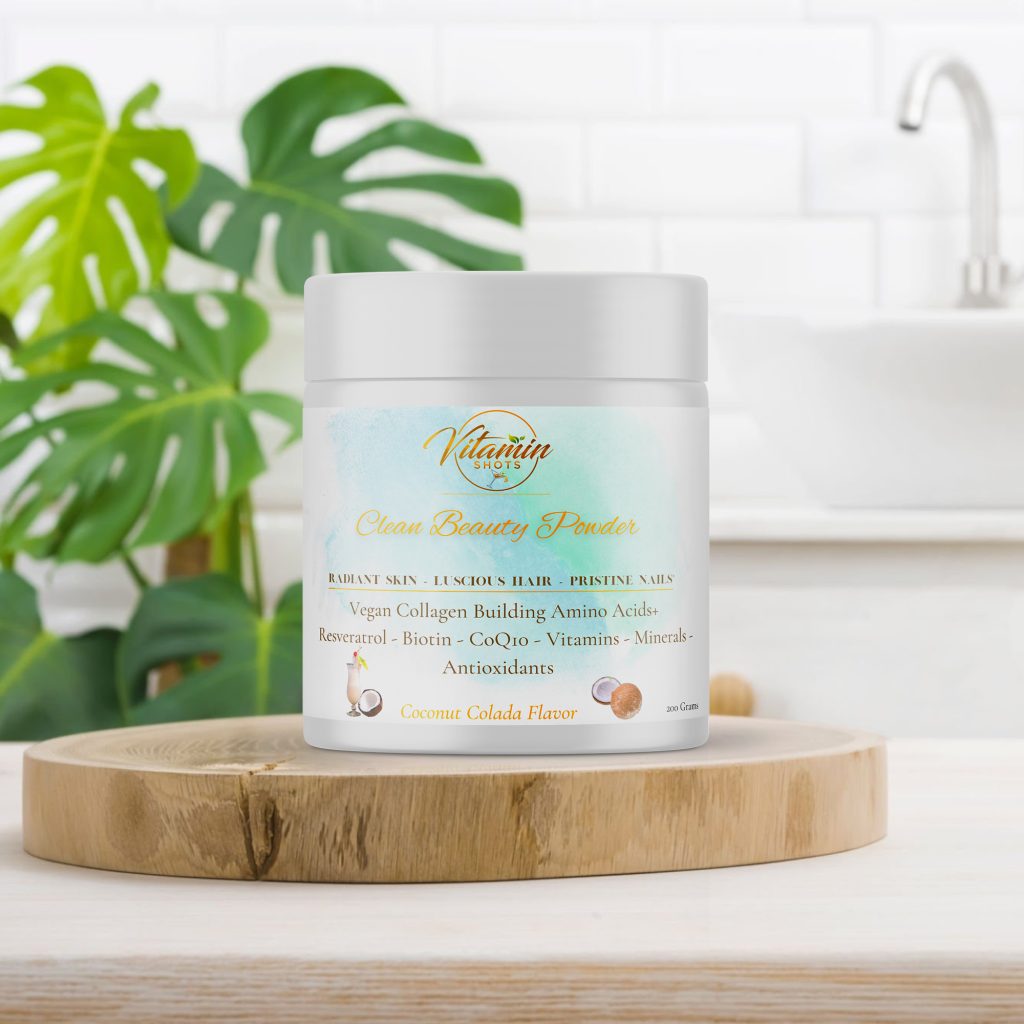
Collagen is the most talked-about beauty supplement of the decade, and also one of the most misunderstood. It's marketed as a single miracle ingredient you swallow and absorb directly into your skin — but that's not how collagen actually works in the human body. Collagen is a large protein molecule that gets broken down into amino acids during digestion long before it ever reaches your skin, hair, or nails. What actually determines whether your body can build new, healthy collagen is whether it has the right raw materials and cofactors to manufacture it — a process called endogenous collagen synthesis. This guide breaks down what collagen actually is, what the research really shows about oral collagen supplements, which nutrients your body uses to build its own collagen, and how to evaluate whether a supplement is genuinely supporting your skin, hair, and nails or just riding a marketing trend.
The quick answer: how collagen supplementation actually works
Oral collagen (from bovine, marine, or other animal sources) is broken down into amino acids and peptides during digestion — your body does not absorb intact collagen molecules and route them directly to your skin. Some research suggests collagen peptides may signal fibroblast cells to produce more collagen, but the evidence is still developing and effect sizes in clinical trials are modest.
Collagen production in your body depends on specific nutrients — particularly vitamin C, zinc, copper, silica, and the amino acids proline, glycine, and lysine — that act as cofactors and building blocks for your body's own collagen synthesis machinery.
Save this article for later
Enter your email and we'll send you a direct link — no account needed.
A vegan collagen "booster" approach delivers these precursor nutrients directly rather than animal-derived collagen protein, supporting your body's natural collagen production process instead of introducing pre-formed collagen from an external source.
What this article covers
- What collagen actually is, biologically
- The digestion problem: why swallowing collagen isn't that simple
- What the clinical research actually shows
- The nutrients your body needs to build its own collagen
- Why collagen production declines with age
- Animal-derived collagen vs precursor nutrient approaches
- What actually helps skin, hair, and nails specifically
- How to evaluate any collagen product's claims
- Frequently asked questions
What collagen actually is, biologically
Collagen is the most abundant protein in the human body, making up roughly 30% of total protein mass [1]. It's the primary structural protein in skin, connective tissue, tendons, ligaments, cartilage, bone matrix, and blood vessel walls. In skin specifically, collagen forms a dense structural network in the dermis that provides firmness, elasticity, and strength.
There are at least 28 identified types of collagen in the human body, but Type I collagen accounts for roughly 90% of the body's total collagen and is the dominant form found in skin, tendons, and bone. Type III collagen is also prominent in skin, particularly in younger, more elastic tissue.
Structurally, collagen is built from a distinctive triple-helix protein structure made primarily of three amino acids: glycine, proline, and hydroxyproline. This structure is what gives collagen its unique tensile strength — comparable, structurally, to a rope made of three interwoven strands.
The digestion problem: why swallowing collagen isn't that simple
Here's the biological reality that most collagen supplement marketing glosses over: collagen is a protein, and like every protein you eat, it gets broken down during digestion.
When you consume collagen — whether from bone broth, a collagen peptide powder, or a supplement — your digestive system doesn't recognize it as "collagen destined for your skin." Digestive enzymes (proteases) break the collagen protein down into smaller peptide fragments and eventually into individual amino acids, exactly the way any other dietary protein is processed [2]. These amino acids then enter general circulation and get used by the body wherever they're needed — which could be muscle repair, enzyme production, immune function, or any of hundreds of other processes. There's no biological mechanism that routes ingested collagen specifically to your skin.
The "bioactive peptides" argument
Some collagen research has focused on specific collagen peptides (short chains of 2-3 amino acids, like the dipeptide prolyl-hydroxyproline) that appear to survive digestion partially intact and enter the bloodstream. Some studies suggest these specific peptide fragments may act as signaling molecules that stimulate fibroblasts — the cells responsible for producing collagen — to increase their own collagen output [3]. This is a genuinely interesting and still-developing area of research, but it's a signaling effect, not a direct "delivery" of collagen to your skin. Your body would still be building the collagen itself; the ingested peptide is more like a messenger than a raw material shipped directly to the construction site.
What the clinical research actually shows

The honest answer is that collagen supplement research is promising but still limited, and it's important to separate what's well-established from what's still preliminary.
What has reasonable clinical support
- Skin hydration and elasticity: Several randomized controlled trials and a systematic review found modest improvements in skin hydration and elasticity with 8-12 weeks of collagen peptide supplementation [4]. Effect sizes were generally small to moderate.
- Skin wrinkle reduction: Some studies report modest reductions in wrinkle depth after consistent collagen peptide use over 8+ weeks, though study quality and sample sizes vary considerably.
What has weaker or more limited evidence
- Hair growth and thickness: Direct evidence specifically for oral collagen supplementation improving hair growth is limited. Most hair-related benefits attributed to collagen are more directly supported by the amino acids and cofactor nutrients (biotin, zinc, etc.) commonly included alongside collagen in blended products, rather than collagen protein itself.
- Nail strength: Similarly limited direct evidence for collagen specifically, though a small number of studies on collagen peptides have reported improved nail growth rate and reduced brittleness.
- Joint and cartilage health: Some evidence supports collagen peptides for joint comfort, particularly in athletes, but this is a separate application from skin/hair/nail cosmetic use.
What the research doesn't show
No credible clinical research shows that oral collagen supplementation directly delivers intact collagen molecules to skin tissue, or that it works through anything other than an amino acid/peptide signaling mechanism. Claims that specifically promise collagen is "absorbed directly into your skin" are not consistent with basic digestive physiology.
The nutrients your body needs to build its own collagen
Regardless of whether you take a collagen peptide supplement or not, your body is constantly synthesizing new collagen on its own — and that process depends entirely on having adequate raw materials and enzymatic cofactors available. This is arguably the more scientifically well-established side of the collagen conversation.
Vitamin C — the essential cofactor
Vitamin C is required as a cofactor for two specific enzymes (prolyl hydroxylase and lysyl hydroxylase) that stabilize the collagen triple-helix structure during synthesis [5]. Without adequate vitamin C, the body cannot properly cross-link and stabilize newly formed collagen — this is precisely why scurvy (severe vitamin C deficiency) causes connective tissue breakdown, bleeding gums, and poor wound healing. Vitamin C is not optional for collagen synthesis; it's structurally required.
The amino acids: glycine, proline, and lysine
Collagen's triple-helix structure is roughly one-third glycine by molecular composition, with proline and hydroxyproline also making up a large share. Adequate dietary intake of these amino acids — whether from complete proteins or targeted supplementation — provides the literal building blocks. Lysine is also required, and along with vitamin C, is involved in the cross-linking process that gives mature collagen its strength.
Zinc
Zinc is a cofactor for several enzymes involved in collagen synthesis and also plays a role in stabilizing the structure of proteins generally. Zinc deficiency has been directly associated with impaired wound healing, a process highly dependent on rapid collagen production [6].
Copper
Copper is required for the enzyme lysyl oxidase, which catalyzes the cross-linking of collagen and elastin fibers — a critical step that gives mature connective tissue its tensile strength [7]. Without adequate copper, newly synthesized collagen remains structurally weaker.
Silica
Silica (silicon) has been studied for its role in collagen synthesis and connective tissue health, though the research base is smaller than for vitamin C or zinc. Some studies suggest silica may support the enzyme activity involved in collagen cross-linking.
Biotin and B-complex vitamins

While biotin's role in collagen synthesis specifically is less direct, it's well-established for supporting keratin production — the primary structural protein in hair and nails (distinct from but related to overall connective tissue health). Biotin deficiency is associated with hair thinning and brittle nails.
Why collagen production declines with age

Natural collagen production peaks in your twenties and begins a measurable decline after that — research estimates roughly a 1% decline in collagen production per year starting around age 20, with more rapid decline for women during and after menopause due to the role estrogen plays in collagen synthesis [8].
Several factors accelerate this decline beyond normal aging:
- UV exposure: Chronic sun exposure activates enzymes (matrix metalloproteinases) that break down existing collagen faster than it can be replaced — this is the primary driver of "photoaging"
- Smoking: Directly damages collagen and elastin fibers and impairs new collagen synthesis
- High sugar intake: Contributes to a process called glycation, where sugar molecules bind to collagen fibers and make them stiffer and more brittle
- Chronic stress: Elevated cortisol has been associated with reduced collagen synthesis
- Nutrient deficiencies: Inadequate vitamin C, zinc, copper, or protein intake directly limits the raw materials available for collagen production, regardless of age
This is an important point: even a 25-year-old with excellent genetics will have suboptimal collagen production if they're deficient in vitamin C, zinc, or protein. Age is one factor among several, not the only one.
Animal-derived collagen vs precursor nutrient approaches
There are two fundamentally different strategies in the collagen supplement market, and understanding the distinction matters for making an informed choice.
Approach 1: Animal-derived collagen peptides
Most collagen supplements on the market are hydrolyzed collagen peptides derived from animal connective tissue — typically bovine (cow) hide and bones, marine sources (fish skin and scales), or occasionally chicken or eggshell membrane. These are processed through hydrolysis to break the collagen into smaller peptide chains that are somewhat easier to digest and absorb than intact collagen protein.
This approach has the clinical research base described in Section 3 — modest evidence for skin hydration and elasticity benefits, tied to the peptide-signaling mechanism. It is not vegan, since it requires animal byproducts as a raw material source.
Approach 2: Precursor nutrient / "collagen booster" formulas
A different approach — sometimes marketed as a "collagen booster" — does not contain any collagen protein at all. Instead, it delivers the specific vitamins, minerals, and amino acids described in Section 4 (vitamin C, zinc, copper, silica, glycine, proline, lysine) that your body's own cells use to synthesize new collagen through its natural biological pathway.
This approach is inherently vegan-compatible, since none of these precursor nutrients require animal sourcing. The scientific logic is straightforward: rather than trying to get pre-formed collagen protein past your digestive system and hoping some signaling benefit survives, you directly supply the well-established cofactors and building blocks your body already uses to manufacture collagen on its own — the same synthesis pathway that's been active in your body since childhood.
A brief note on Glam Dust
Glam Dust, The Vitamin Shots' beauty-focused formula, follows the precursor nutrient approach rather than the animal-derived collagen approach. It does not contain animal-derived collagen protein. Instead, it delivers essential amino acids, vitamins, and minerals — the specific cofactors and building blocks described above — that your body uses to manufacture its own functional collagen peptides through its natural synthesis pathway. This makes it fully vegan, and it sidesteps the sourcing question entirely, since traditional collagen supplements are typically derived from cow connective tissue, fish skin and scales, or other animal byproducts.
What actually helps skin, hair, and nails specifically

Skin, hair, and nails are three different tissue types with some overlapping but distinct nutritional needs:
Skin
Collagen and elastin provide structure; vitamin C is required for collagen synthesis; vitamin E and other antioxidants help protect existing collagen from oxidative damage; adequate hydration and essential fatty acids (omega-3 and omega-6) support the skin barrier function that keeps skin looking plump and reduces moisture loss.
Hair
Hair is primarily composed of keratin, a different structural protein from collagen. Biotin, zinc, and adequate protein intake are the nutrients most directly tied to healthy keratin production. Iron deficiency is also a well-documented cause of hair thinning, particularly in women. Omega-3 fatty acids support scalp health.
Nails
Like hair, nails are primarily keratin-based. Biotin has the most direct research support for nail health specifically. Adequate protein and zinc intake also matter, and iron deficiency is associated with brittle, spoon-shaped nails (koilonychia) in more severe cases.
The common thread
Notice that vitamin C, zinc, biotin, protein/amino acids, and omega fatty acids show up repeatedly across all three tissue types. A comprehensive nutrient approach that covers these bases tends to support skin, hair, and nail health more broadly than any single "miracle" ingredient — including collagen itself.
How to evaluate any collagen product's claims
Whether you're looking at an animal-derived collagen peptide product or a precursor nutrient formula, here's how to read the claims critically:
- Be skeptical of "absorbed directly into skin" language. This isn't how digestion works for any protein, collagen included.
- Check for vitamin C alongside collagen or collagen-precursor ingredients. Without it, collagen synthesis cannot proceed properly regardless of what other ingredients are present.
- Look for realistic timelines. Clinical studies showing skin benefits generally used 8-12 weeks of consistent daily use, not days.
- Understand the sourcing if choosing animal-derived collagen. Bovine, marine, and other animal sources have different amino acid profiles and different ethical/dietary considerations.
- Recognize that "clinically proven" claims should reference actual published research, not just anecdotal or internal testing.
Explore the full Vitamin Shots product line, including Vitamin Shots for comprehensive daily nutrition and Vitamin Sprinkles for an alternative delivery format.
Frequently asked questions
Does drinking collagen actually do anything?
The clinical evidence suggests modest benefits for skin hydration and elasticity with consistent use over 8-12 weeks, likely through a peptide-signaling mechanism that stimulates the body's own collagen-producing cells, rather than direct delivery of collagen to the skin. Evidence for hair and nail benefits from collagen specifically is more limited.
Is vegan collagen a real thing?
True collagen protein is only found in animals, so "vegan collagen protein" does not exist in nature. However, vegan "collagen booster" products deliver the vitamins, minerals, and amino acids (vitamin C, zinc, copper, glycine, proline, lysine) that the body uses to synthesize its own collagen — supporting the same biological pathway without requiring animal-derived collagen protein as an ingredient.
What foods help your body make more collagen?
Citrus fruits, bell peppers, and broccoli (vitamin C); pumpkin seeds, chickpeas, and cashews (zinc); shiitake mushrooms and sesame seeds (copper); and protein-rich foods generally for amino acids. No single food contains everything needed, which is why a combination approach or targeted supplementation is often used.
At what age does collagen production start declining?
Collagen production typically peaks in the twenties and begins declining at a rate of roughly 1% per year starting around age 20. The decline accelerates for women during and after menopause due to the role estrogen plays in collagen synthesis.
How long does it take to see results from collagen supplementation?
Clinical studies showing measurable skin hydration or elasticity improvements typically used 8-12 weeks of consistent daily use. Shorter timelines are not well-supported by the available research, regardless of product marketing claims.
Where does traditional collagen supplement powder come from?
Most commercial collagen supplements are derived from animal connective tissue — commonly bovine (cow) hide and bone, marine sources (fish skin and scales), or occasionally chicken or eggshell membrane. This makes traditional collagen supplements unsuitable for vegans and vegetarians.
Is vitamin C really necessary for collagen production?
Yes, structurally necessary. Vitamin C is a required cofactor for the enzymes that stabilize collagen's triple-helix structure during synthesis. This is well-established biochemistry — severe vitamin C deficiency (scurvy) causes connective tissue breakdown precisely because collagen cannot be properly synthesized without it.
Does biotin help hair and nails, or is that a myth?
Biotin supports keratin production, the structural protein in hair and nails (distinct from collagen). Biotin deficiency is associated with hair thinning and brittle nails, and correcting a genuine deficiency can improve these symptoms. However, biotin supplementation beyond correcting a deficiency has less robust evidence for further improvement in people who aren't deficient.
Can you get enough collagen-supporting nutrients from diet alone?
Theoretically yes, with careful planning — adequate protein, vitamin C-rich produce, zinc and copper sources, and overall balanced nutrition can supply what's needed. In practice, many people fall short of optimal levels of one or more of these nutrients, which is why targeted supplementation is commonly used alongside diet.
Does sugar really damage collagen?
Yes, through a process called glycation, where excess sugar molecules in the bloodstream bind to collagen fibers and make them stiffer, less elastic, and more prone to breakdown. This is one of the reasons high sugar intake is associated with accelerated visible skin aging.
References & sources
- Ricard-Blum S. The collagen family. Cold Spring Harbor Perspectives in Biology. 2011;3(1):a004978.
- León-López A, Morales-Peñaloza A, Martínez-Juárez VM, et al. Hydrolyzed Collagen—Sources and Applications. Molecules. 2019;24(22):4031.
- Sibilla S, Godfrey M, Brewer S, Budh-Raja A, Genovese L. An Overview of the Beneficial Effects of Hydrolysed Collagen as a Nutraceutical on Skin Properties. The Open Nutraceuticals Journal. 2015;8:29-42.
- de Miranda RB, Weimer P, Rossi RC. Effects of hydrolyzed collagen supplementation on skin aging: a systematic review and meta-analysis. International Journal of Dermatology. 2021;60(12):1449-1461.
- National Institutes of Health, Office of Dietary Supplements. Vitamin C — Fact Sheet for Health Professionals. ods.od.nih.gov
- National Institutes of Health, Office of Dietary Supplements. Zinc — Fact Sheet for Health Professionals. ods.od.nih.gov
- National Institutes of Health, Office of Dietary Supplements. Copper — Fact Sheet for Health Professionals. ods.od.nih.gov
- Shuster S, Black MM, McVitie E. The influence of age and sex on skin thickness, skin collagen and density. British Journal of Dermatology. 1975;93(6):639-643.
.png)